Asbestos Floor Tile Removal: Why It’s Not Just a Case of Lifting Old Tiles
Whether you are tackling a residential weekend renovation or overseeing a commercial property rip-out, tearing up ugly, outdated floor tiles seems like an easy way to save a bit of money. However, if your building was built or renovated before 2000, those old floor tiles and the glue holding them down may contain asbestos.
What looks like a simple project can rapidly turn into a major hazard. If tiles are broken, sanded, drilled, aggressively scraped or removed incorrectly, asbestos fibres may be released, turning a simple task into a severe health risk for your family or a serious HSE compliance breach for your business.
Why Do Old Floor Tiles Contain Hidden Dangers?
Thermoplastic or vinyl tiles manufactured during the 20th century commonly used asbestos for durability and insulation.
It is a massive misconception that the danger stops at the asbestos tiles themselves. In many cases, the dark bitumen adhesive used underneath them is also an asbestos-containing material. When these flooring materials are left undisturbed, they are generally considered low risk. The danger spikes entirely based on how they are handled.
What Happens if Asbestos Containing Materials Are Disturbed?
What is the actual impact of tackling this as a DIY project or a standard commercial rip-out? Well, when untrained individuals attempt to remove asbestos floor tiles, they often resort to using power tools, heavy scraping, or aggressive drilling to clear the stubborn black mastic.
This can create asbestos-contaminated dust, which is difficult to clean safely. These invisible asbestos particles settle into the fabric of the property, contaminating hallways, bathrooms, and workspaces long after the job is finished. Breathing in these airborne fibres can lead to severe, life-altering medical conditions that often take decades to manifest:
- Mesothelioma: An aggressive and fatal cancer that develops in the lining of the lungs or abdomen, almost exclusively caused by past asbestos exposure.
- Asbestosis: Severe and irreversible scarring of the lung tissue, which leads to chronic shortness of breath and permanent lung damage.
- Lung Cancer: A significantly increased risk of developing malignant tumours in the respiratory tract.
- Pleural Thickening: A condition where the lining of the lungs swells and hardens, causing tightness in the chest and restricted breathing.
For homeowners, trying to be cost-effective can lead to these devastating health consequences. For commercial buildings, the fallout could result in HSE enforcement action, project delays, prosecution and significant costs.
How CES Carries Out Safe, Controlled Removal
Expert asbestos flooring removal requires a level of containment and precision that general contractors without asbestos training, equipment and correct procedures shouldn’t carry out. A professional company follows strict safety protocols to ensure complete containment from start to finish.
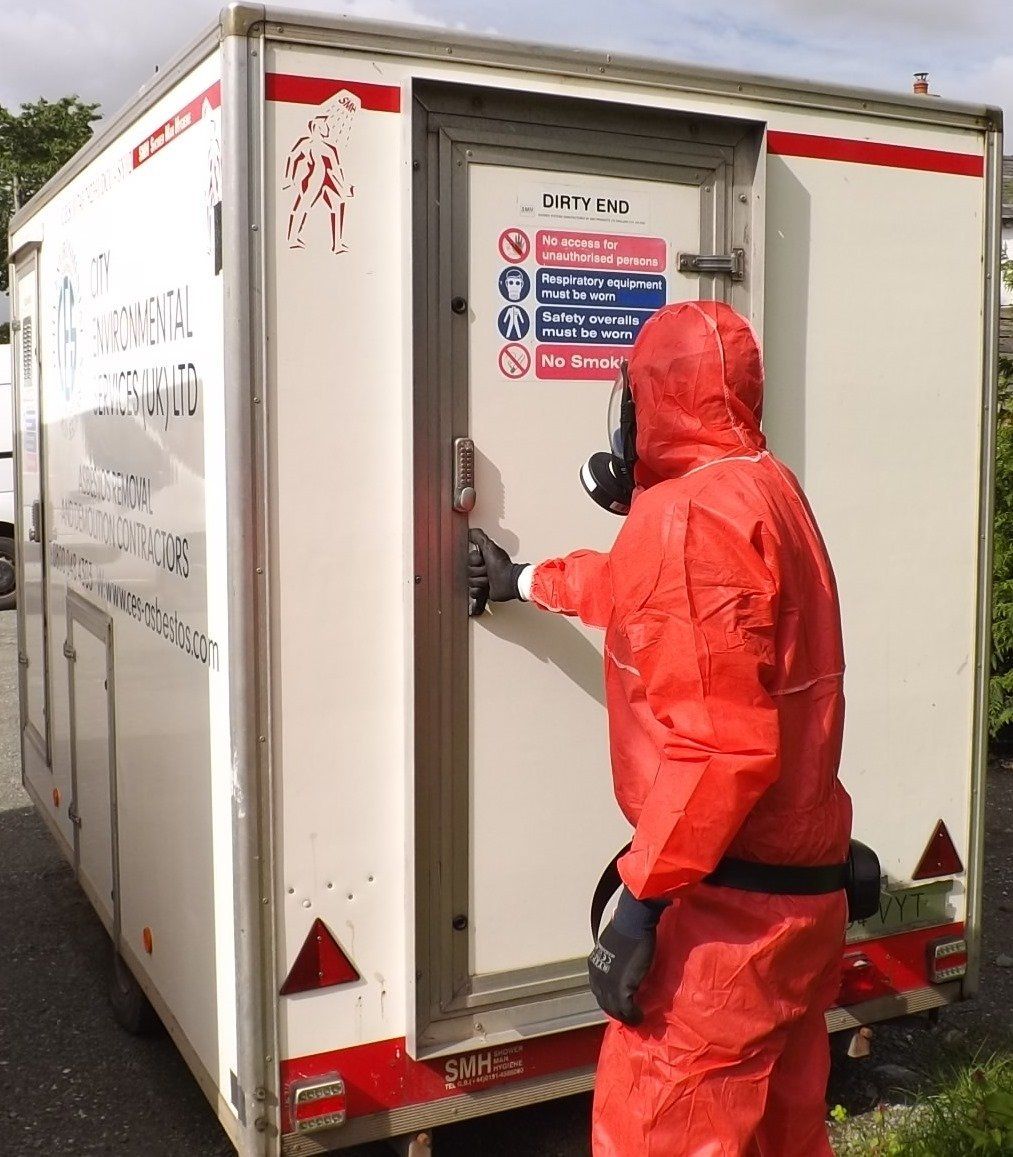
First, we isolate the workspace entirely to protect the rest of the property. Our team uses specialist wetting agents to keep the materials wet throughout the process, which effectively prevents fibre release. We wear heavy-duty protective gear and specialised breathing equipment, utilising precise tools to lift both the tiles and the adhesive safely.
When required or appropriate, we can arrange air monitoring or reassurance testing to maintain peace of mind in your home or commercial property. Testing is the only reliable way to determine if your flooring is dangerous. We take samples and send them to a UKAS-accredited laboratory to verify exactly what we are dealing with before any work begins.
Asbestos Waste Disposal and Regulations
You cannot simply throw old asbestos flooring into a standard skip alongside old carpet, laminate, or roofing materials. Legal compliance is a massive part of safe asbestos management.
All waste must be securely double-bagged, sealed, and labelled correctly. It then requires transport under strict hazardous waste tracking regulations to a licensed disposal site.
While consequences are different for homeowners and commercial project managers, it’s important that homeowners still dispose of asbestos waste through approved routes and not place it in general waste or skips.
Secure Peace of Mind for Your Property with CES
Choosing professional asbestos tile removal takes the entire burden off your shoulders. Whether you want to clear a room for a new carpet or prepare a vast commercial space for new flooring, cutting corners on asbestos floor tile removal is never worth the risk to human health or legal liability.
Do not take risks or guess about the safety of your flooring.
Contact the team at City Environmental Services today to book a professional survey or request a free quote.
Frequently Asked Questions
Can I just put a new covering, like laminate or carpet, directly over old floor tiles?
In many cases, if the original asbestos floor tiles are completely intact, flat, and undisturbed, you can technically leave them in place and lay a new covering like laminate or a new carpet over them.
However, you must be completely certain that future work won’t disturb them. If you ever need to drill into the floor to fix carpet grips or door bars, you risk puncturing the material and releasing fibres. If you are planning a complete renovation, securing safe professional removal first is always the cleanest way to guarantee total peace of mind.
Is a professional survey the only reliable way to determine if my flooring contains asbestos?
Yes. Visual inspection is completely insufficient because asbestos particles are microscopic and thoroughly blended into the vinyl or bitumen adhesive. For commercial properties, assuming a material is safe without verification is a major breach of asbestos management regulations.
Before any refurbishment or demolition strip-out begins, a survey must be conducted. Samples are collected under controlled conditions and analysed by a UKAS-accredited laboratory. This is the only legally defensible method to determine whether you are dealing with hazardous materials before your contractors arrive on site.
What makes the bitumen adhesive under the tiles so dangerous to remove?
DIY removals often face a thick, stubborn adhesive layer firmly stuck to the floor. People frequently use sanding, drilling, or power scraping to smooth the surface for new flooring. This aggressive action pulverises the material, releasing highly toxic dust that is incredibly difficult to decontaminate without specialist extraction equipment.
How does a professional company handle asbestos waste disposal legally?
- Securely Double-Bagged: All retrieved materials are placed inside a regulated polythene sack, which is then placed inside a second identical sack to prevent any potential punctures.
- Sealed and Labelled: The bags are securely sealed to prevent fibre release and clearly marked with official hazardous warning labels.
- Tracked Transport: The waste is loaded into secure transport containers under strict hazardous waste tracking regulations.
- Licensed Disposal: A registered waste carrier transports the load directly to a designated, licensed disposal site for safe, legal elimination.
What are the specific health risks associated with breathing in asbestos fibres?
Asbestos fibres released from damaged or scraped old flooring are invisible but harmful when inhaled, lodging in the lungs and causing serious illnesses like asbestosis, mesothelioma, and lung cancer over time. Since these illnesses take decades to develop, avoiding DIY removal and preventing exposure is essential for long-term health.
Do commercial buildings face different legal requirements for asbestos tile removal compared to homes?
Absolutely. While a domestic homeowner is primarily protecting their personal health, commercial buildings operate under strict statutory frameworks, specifically the Control of Asbestos Regulations.
As a property manager, employer, or quantity surveyor, you have a legal "duty to manage" asbestos. Allowing untrained staff or standard demolition crews to rip out asbestos flooring violates health and safety laws, which could result in HSE enforcement action, project delays, prosecution and high costs. Engaging a professional company like CES ensures the entire process is fully compliant, efficient, and completely documented.