What is the difference between a Licensed and a Non Licensed Asbestos?
Understanding the difference between Licensed (Notifiable) and Non-Licensed (Non-Notifiable) asbestos removal can often be confusing, especially for those outside the asbestos industry. This confusion can lead to stress and difficulties when seeking accurate quotes for asbestos removal.
The asbestos industry contains many grey areas, making it challenging to clearly define the distinctions between Licensed and Non-Licensed materials in a brief overview. However, we aim to cover the essential basics to help you gain a clearer understanding of asbestos removal processes and requirements.
Licensed vs non-licensed asbestos
The damage, deterioration, and quantity of asbestos-containing material play a significant role in determining the appropriate removal method. Generally, if the material is non-fibrous and firmly bound (such as cement, vinyl, or bitumen) and is in reasonable condition, it is classified as non-licensed removal. These non-licensed materials typically contain chrysotile fibres and, in some cases, crocidolite.
The difference between licensed and non-licensed asbestos materials
To an untrained eye, it can be difficult to know the difference. For example, a garage ceiling can either be Asbestos Cement or Asbestos Insulation Board; these two materials can easily be mistaken for one another, even by professionals. By sampling these materials, the lab can determine the type of material and avoid asbestos being wrongly removed and disposed of.
Some examples of non-licensed materials:
- Asbestos Cement Roof Sheets
- Asbestos Vinyl Floor Tiles
- Asbestos Ceiling panels
- Asbestos Bakelite Toilet Cistern
- Asbestos Cement Undercloaks
- Asbestos Roof Slats
Some examples of asbestos that should be removed under licensed conditions:
- Asbestos Insulation Board Soffits
- Asbestos Insulation Board to Garage/other Ceilings
- Asbestos Pipe Insulation
- Asbestos Insulation Board for airing cupboards.
The importance of licensed asbestos removal work
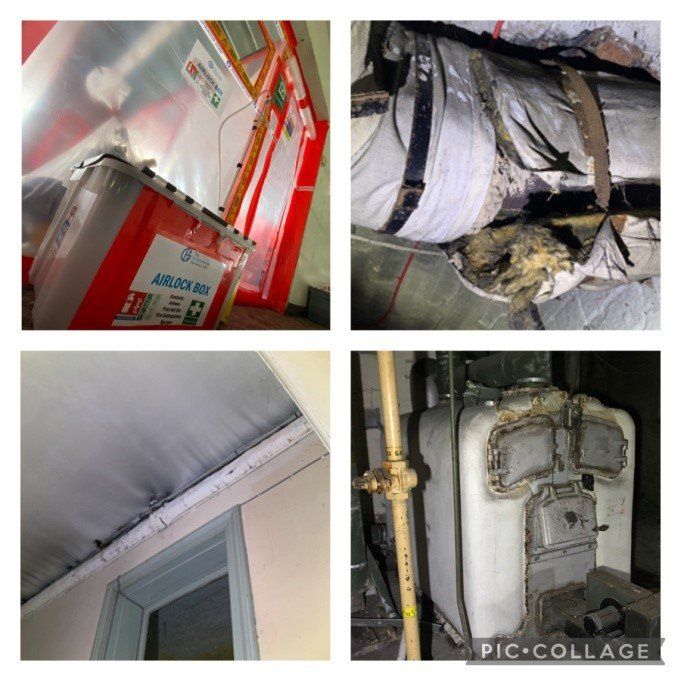
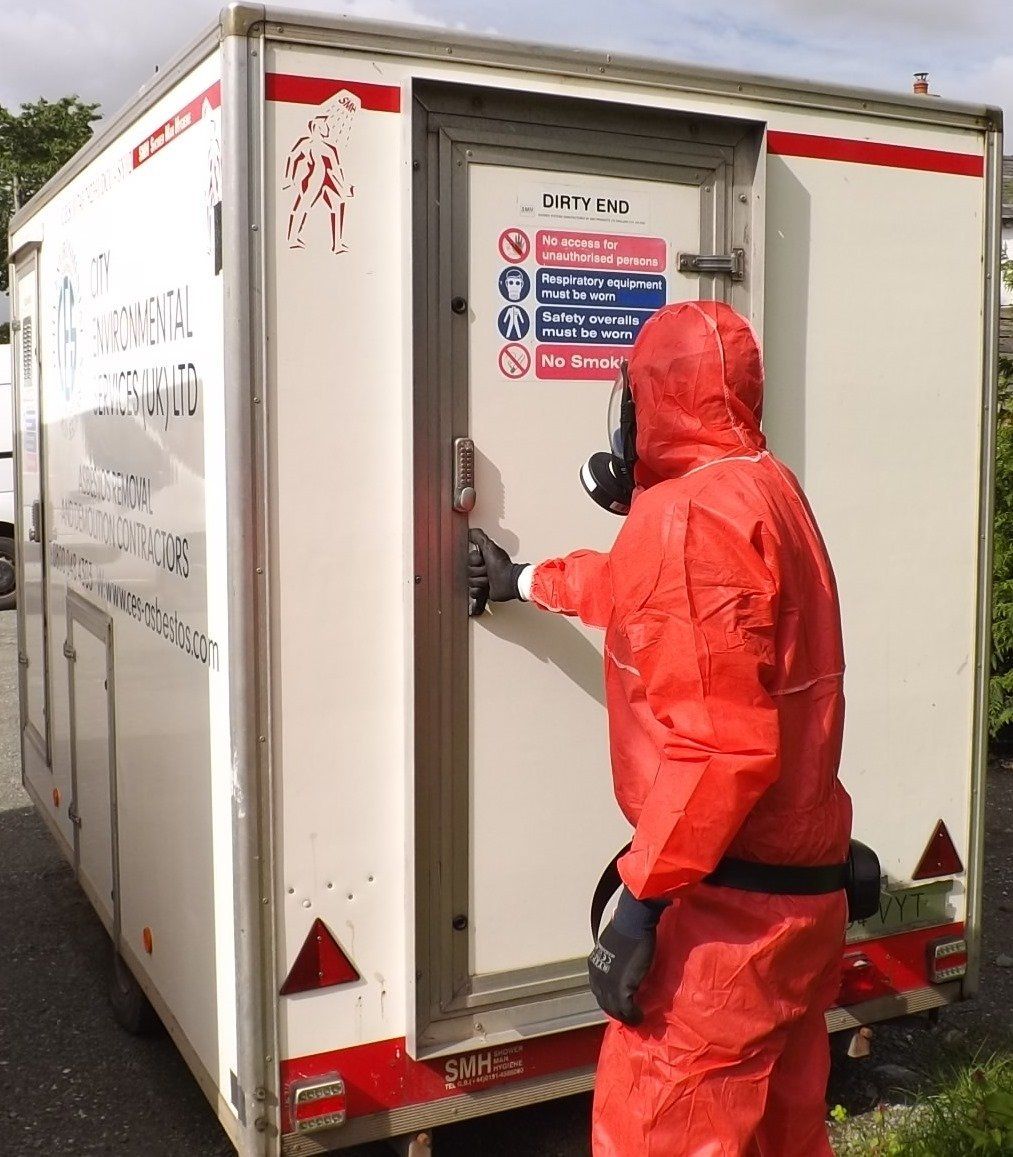
Materials that require removal by Licensed Asbestos Removal Contractors involve stringent safety measures, including a mandatory 14-day notification to the Health and Safety Executive (HSE), as per the Control of Asbestos Regulations 2012. The licensed asbestos removal process includes constructing enclosures around the asbestos-containing materials (ACMs), implementing fibre suppression techniques such as wetting to reduce fibre release, setting up decontamination units for operatives to shower, and using negative-pressure units to control airborne asbestos fibres.
These materials are typically more fibrous silicate mineral-based and friable than those handled under non-licensed asbestos removal, posing a significant hazard as they can release fibres with minimal disturbance. Common examples of licensable work include garage ceilings made of asbestos insulating board (AIB), soffit boards, and undercloaks.
Before removal, an asbestos survey is conducted and samples are often taken to accurately identify the types of asbestos present. These materials frequently contain the Amosite fibre, as well as Chrysotile or Crocidolite, and sometimes even a combination of all three fibre types within the same material.
Asbestos management with City Environmental Services
There are many more asbestos materials that have not been spoken about in this post, and it is always highly recommended that you instruct an Asbestos Surveyor before any refurbishment/ demolition works to help identify if there is any asbestos present.
Contact us for business or residential asbestos removal work. We're here to keep everyone safe and compliant when it comes to asbestos removal.
Frequently Asked Questions
What is the difference between low-risk and high-risk asbestos materials?
High-risk asbestos materials, such as insulating board and pipe lagging, are friable and can release fibres easily, requiring licensed removal. Low-risk materials, like asbestos cement sheets and vinyl tiles, are non-friable and less likely to release fibres, allowing for non-licensed removal with proper safety measures. A thorough risk assessment determines the appropriate removal method.
Why is knowing the difference between licensed and non-licensed asbestos removal important for your health?
Understanding the difference is crucial because licensed asbestos removal is required for high-risk asbestos-containing materials that can release harmful asbestos fibres, posing serious health risks and environmental contamination. Non-licensed removal applies to lower-risk materials, but both require proper handling based on a thorough risk assessment to ensure safety and prevent asbestos fibres from being released into the environment.
Who regulates asbestos removal work in the UK?
Asbestos removal is governed by the Control of Asbestos Regulations 2012 and overseen by the Health and Safety Executive (HSE). Licensed asbestos removal must be carried out by an HSE licensed contractor, while some non licensed work may require notification to the appropriate regulatory body.
What is notifiable non licensed removal?
Notifiable Non Licensed Removal (NNLW) is a category of non licensed work that involves larger-scale or higher-risk asbestos cement products or textured coatings. This work requires notification to the Health and Safety Executive (HSE) before commencing and must follow strict control limits to prevent fibre release.
Why is a thorough risk assessment important before removing asbestos?
A detailed risk assessment is essential to determine the appropriate removal method (licensed or non-licensed). It considers the type, condition, and friability of asbestos-containing materials, ensuring regulatory compliance and minimising health risks by preventing uncontrolled fibre release during refurbishment work.
What are the legal consequences of not following asbestos removal regulations?
Failing to comply with the Control of Asbestos Regulations 2012 (CAR 2012) can result in fines and imprisonment. All asbestos removal work must be done by qualified professionals following strict safety measures, including air monitoring and staying within the legal control limit. A thorough risk assessment demonstrating the risk involved and notifying the appropriate regulatory body, like the Health and Safety Executive (HSE), is required for licensed and notifiable non-licensed work, or it can be classed as non-regulatory.